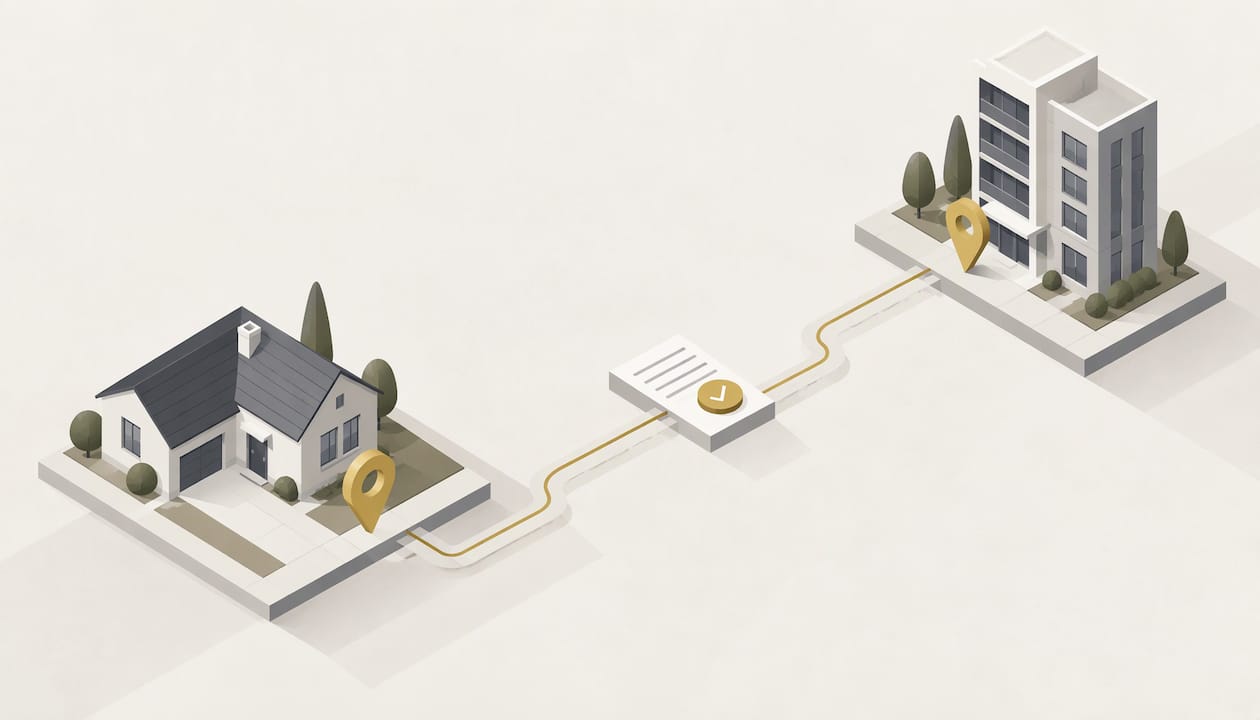
You can sell a house in another state without ever flying back to it. Signing, notarizing, title work and funding can all be done remotely. The hard part is everything around the paperwork: showings, repairs, tenants, taxes in a state you no longer live in. A direct cash sale removes most of that, because there are no showings, no repairs and no agent commission. At Polus Acquisitions Group we buy houses in Houston, San Antonio, Dallas and other U.S. markets, so you can request a free cash offer review and work through the sale by phone and email. Offers are subject to inspection and transaction requirements.
TL;DR
- You can sign closing documents remotely: by mail with a local notary, by online notarization, or through a power of attorney arranged in advance.
- The expensive surprises are taxes and withholding, not the signing. Some states hold back part of a nonresident seller’s proceeds at closing.
- A traditional listing means managing showings, repairs and a vacant house from a distance. A direct as-is sale takes those off your list.
- We close in as little as 10 days, on a date you choose. Offers are subject to inspection and transaction requirements.
- Whatever route you pick, confirm wire instructions by phone with the title company before you send or receive money.
Table of Contents
- Why selling from another state feels harder
- What you can do from a distance
- Taxes: where out-of-state sellers get caught
- The real cost of listing from far away
- Selling as-is for cash when you live elsewhere
- Protecting the property and the sale while you are away
- How a remote sale with us works
- Ready to sell without flying in?
- Our perspective
- FAQ
- Sources
Why selling from another state feels harder
A local seller can walk the house, meet the agent, sign at the title office and hand over keys. When you live elsewhere, each of those steps becomes a question. Who lets the buyer’s inspector in? Who handles the lawn and the broken water heater? What if a repair request comes in at day 20 and you are 1,500 miles away?
Most out-of-state owners fall into a few groups: heirs who inherited a house, landlords who moved or are tired of managing from afar, people who relocated for work or the military, and owners of a vacant house that keeps costing money. The need is the same in each case. You want a sale that doesn’t depend on you being present.
What you can do from a distance
Almost everything in the paperwork can be done remotely. Here is how a Texas closing works, since many of the homes we buy are there.
Three ways to sign
According to a Texas title company’s 2026 guide, an out-of-state seller has three remote signing methods:
- Mail-away closing. You sign the original documents in front of a notary where you live and send them back by tracked overnight courier. Texas law recognizes acknowledgments made in other states.
- Remote online notarization. A Texas online notary can notarize your signature over live video, and the signer may be outside Texas. The session is recorded.
- Power of attorney. Someone you trust signs for you. It has to be approved in advance, signed properly and recorded, and some lenders limit its use.
A mail-away closing adds shipping time, so build a few business days into the schedule. Online notarization is now widespread in the U.S., which means you can often avoid the courier altogether.
Inspections and access
In a traditional sale, the buyer’s inspector, appraiser and sometimes a lender all need to get inside. If you are far away, that means arranging key access for each visit. In a direct purchase, the buyer typically looks at the property once. We handle the walk-through ourselves, and our offers are subject to inspection and transaction requirements.
Title work and the escrow officer
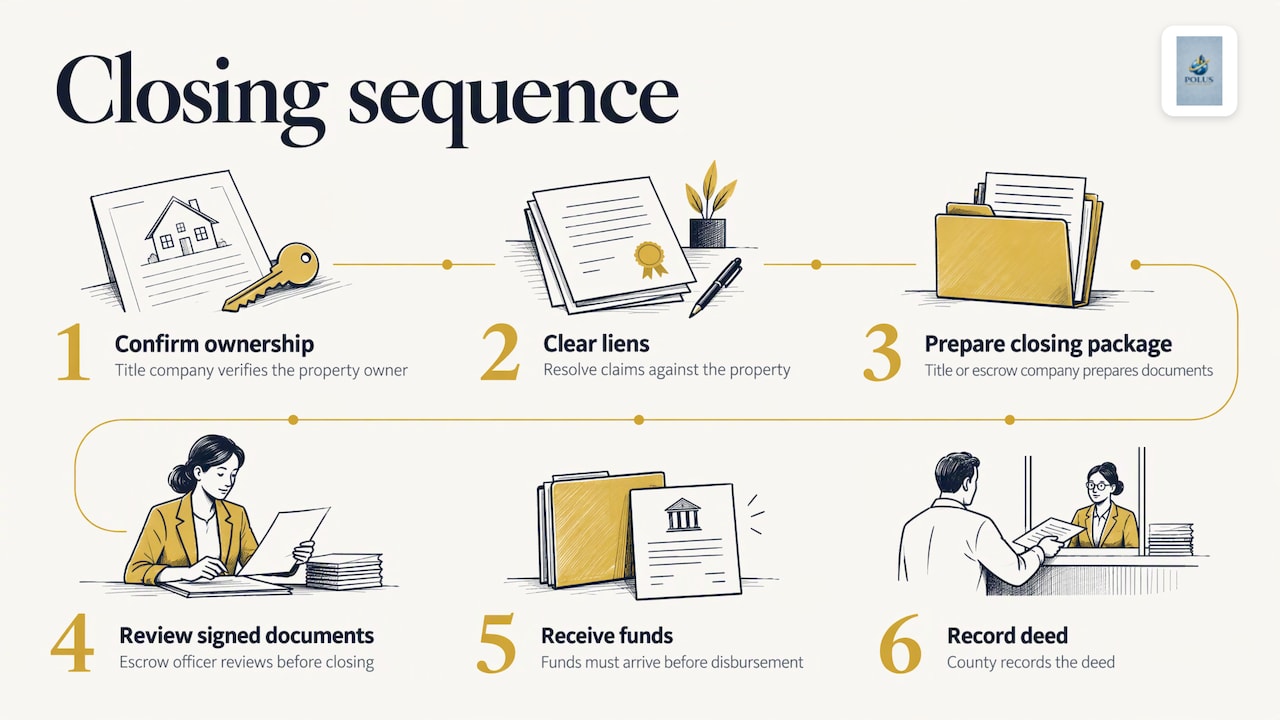
The title or escrow company confirms who owns the property, clears liens and prepares the closing package. The escrow officer reviews your signed documents before closing, and funds must arrive before disbursement. The deed is then recorded with the county. You mostly answer questions and return signatures. If the title has complications, such as a second mortgage, a judgment or an estate that hasn’t been settled, say so at the start. Our guide to selling a home with a second mortgage explains how payoffs are handled at closing.
Taxes: where out-of-state sellers get caught
This is the part of the sale most owners learn about too late. Two separate things are going on: the tax you owe on your gain, and the money a state may withhold at closing.
The federal home sale exclusion
If the house was your main home, the IRS lets you exclude up to $250,000 of gain ($500,000 for many married couples filing jointly). You generally must have owned the home for at least 24 months and lived in it as your main home for at least 24 of the 5 years before the sale. If you moved out and rented it, or inherited it, the rules differ, so a tax professional should look at your numbers.
State withholding on nonresident sellers
Several states require the buyer or closing agent to hold back a share of a nonresident seller’s proceeds. It is a prepayment against your tax, not an extra fee, and it is settled when you file a nonresident return. Rates and rules vary widely. A state-by-state summary lists about fifteen states with withholding, including California, New Jersey, New York and Maryland, at different percentages of price or gain. Georgia, for example, generally requires withholding of 3% of the price or the gain when the seller is not a Georgia resident. Colorado attorneys have noted that withholding rules can depend on a seller’s last known address rather than where you pay income tax, which catches people out.
Texas has no state income tax, but if you own a Texas property you still carry property taxes until closing. If you plan to keep it a while longer, a Texas property tax protest can address the appraisal side.
What to do about it:
- Ask the title company early which state form applies and whether an exemption certificate is available.
- Keep your closing disclosure, improvement records and the dates you lived in the home.
- Talk to a CPA or tax attorney in the state where the property sits. We are not a tax adviser, and what you owe depends on your own situation.
The real cost of listing from far away
A listing works best when someone is on site. From a distance you pay for the gaps:
- Agent commission and closing costs come out of your proceeds.
- Repairs and cleaning have to be hired, scheduled and checked by someone else.
- Carrying costs keep running while the house sits: mortgage, taxes, insurance, utilities, lawn care.
- Vacancy risk goes up for an empty house, and some insurers restrict coverage on vacant homes.
- Delays multiply. A single failed inspection or financing fall-through can restart the clock on showings.
You can compare the numbers yourself with our cash offer vs listing calculator, which compares net proceeds for each route.
If you are selling a rental, tenants add another layer: notice periods, access and condition. Our guide to selling rental property covers taxes, tenants and repairs in more detail. If the house came to you through an estate, see selling an inherited house in Dallas for probate and title basics. If you are moving for a job or a military order, our relocation home sale guide lays out the timing.
Selling as-is for cash when you live elsewhere
A direct cash sale fits an out-of-state owner well, because the things that need you on site mostly disappear.
| What a remote seller deals with | Listing with an agent | Direct sale to us |
|---|---|---|
| Agent commission and listing fees | Yes | None |
| Repairs before sale | Often requested | Not required, we buy as-is |
| Showings and open houses | Many | None |
| Closing date | Depends on the buyer’s financing | You choose the date |
| Paperwork | Coordinated across agent, buyer, lender | We handle the paperwork with you directly |
Our offers are subject to inspection and transaction requirements, and we can close in as little as 10 days when the title is ready. Condition doesn’t rule a house out: foundation trouble, roof damage, fire or water damage, code violations, a house full of belongings. We also work with complicated situations, including probate, divorce, liens and a landlord exit, and we handle the legal paperwork in those cases.
What to check before you accept any cash offer
Whoever you sell to, read the offer for these points:
- The offer’s conditions. Know what inspection and transaction requirements apply and what could change the terms.
- Who pays closing costs and whether there are fees or commissions. We charge none.
- The closing date, and whether you set it.
- Who the title company is, and how they will contact you.
- How you will get paid. Confirm wiring details by calling a number you found independently, never from an email alone.
Protecting the property and the sale while you are away
Small problems turn into big ones when no one is looking. A short list helps:
- Insurance. Tell your insurer the house is vacant or being sold and ask what coverage applies.
- Utilities. Keep power and water on until closing, so inspections can happen.
- Mail and notices. Forward mail or give the county a current address, so tax or code notices reach you.
- Keys and access. Give one trusted person the only copy and a written list of who may enter.
- Wire fraud. Fraudsters send fake payment instructions that look like they came from the title company. Verify any change in instructions by phone with the title company’s known number.
- Title surprises. Unpaid taxes, liens or a deceased owner still on the deed can slow things down. Raise them up front.
A Texas note: if you pay someone to show a single-family home or lease it, the Texas Real Estate Commission generally requires that person to hold a license, per a remote management guide. Bookkeeping and arranging repairs usually don’t. This matters if you have been relying on a friend to handle the property.
How a remote sale with us works
- Request your free offer review online or call (281) 771-1395. Tell us the address, the condition and what is going on with the property.
- We review the property and the situation. Offers are subject to inspection and transaction requirements.
- You get a no-obligation offer. There are no agent commissions or listing fees.
- You choose the closing date. We can close in as little as 10 days.
- Sign remotely. The closing paperwork is handled directly with you, and you can sign by mail or online as the title company allows.
- Close and get paid at the title company.
We have bought more than 200 homes since 2015, and you speak with real people throughout.
Ready to sell without flying in?
If the house is far away and you want one point of contact, start with a free offer review. You tell us about the property, and we tell you what we can offer. No repairs, no showings, no commissions.

To begin, visit our cash home offer page or call (281) 771-1395. We buy in Houston, San Antonio, Dallas and other U.S. markets. If you are buying rather than selling, our buyer list gives investors access to off-market properties.
Our perspective
Out-of-state owners rarely tell us they want a bigger price. They tell us they want the house to stop being their problem. It might be a parent’s home they inherited, a rental across the country, or a vacant property that keeps costing money.
We built our process for that situation. We buy as-is, we don’t charge commissions or listing fees, and you pick the closing date. Our team works with you directly, including the legal and paperwork side when a sale is complicated. You can do all of it by phone and email.
We can’t promise a price or a closing date, and every offer is subject to inspection and transaction requirements. What we can promise is clear communication and a straight answer. Since 2015 we have bought more than 200 homes, and we start every conversation by listening.
Ammanuel
FAQ
Can I really sell a house without traveling there?
Yes. Documents can be notarized where you live and mailed back, signed through an online notary, or signed by an agent under a power of attorney set up ahead of time. The title company will tell you which options it accepts. In a direct sale there are no showings to attend.
Will I owe tax if I sell a house in a state where I no longer live?
Possibly. The IRS lets many sellers exclude up to $250,000 of gain on a main home, and some states withhold part of a nonresident seller’s proceeds at closing. Ask the title company which forms apply, and have a tax professional review your situation.
How long does an out-of-state sale take?
A listing depends on finding a buyer, inspections and the buyer’s financing. With us, we can close in as little as 10 days, on a date you choose. Offers are subject to inspection and transaction requirements, and title issues can add time.
Can I sell an inherited or tenant-occupied house from another state?
Yes. Inherited homes may need probate steps or an authorized executor to sign, and tenant-occupied homes need the lease and notice rules respected. We work with both situations, so tell us what applies when you request your offer review.
Sources
- Closing on Dallas Property From Out of State: 3 Ways
- IRS Topic no. 701, Sale of your home
- Capital Gains Tax on Out-of-State Property: State Rules
- The Georgia Closing Guide for Home Buyers, Sellers and Borrowers
- Tax and Estate Planning for Nonresident Real Estate Owners
- Managing Rental Properties Remotely